5000 BC
The origins: the discovery by the Phoenicians
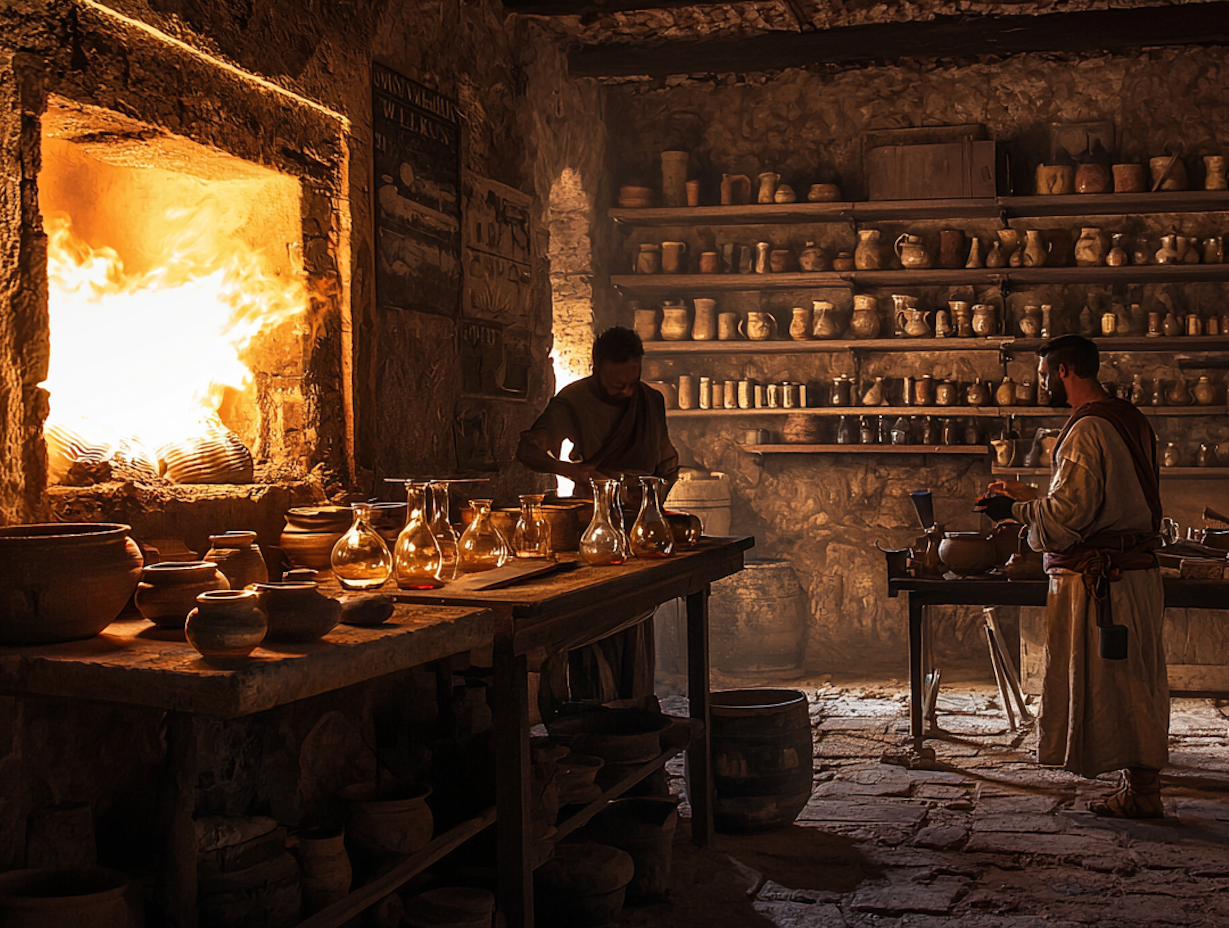
According to the Roman naturalist Pliny the Elder, the discovery of glass was a fortunate accident attributed to Phoenician merchants. Around 5000 BC, while stopping along the banks of the Belo River in Syria, the merchants used blocks of nitrate from their cargo to support their cooking pots over a fire. The heat caused the sand beneath them to melt and mix with the nitrate, accidentally creating glass.
Although it may sound like a legend, this story reflects the primitive melting process that gave birth to glassmaking. From that accidental discovery, the art of glassmaking evolved through human curiosity and ingenuity, becoming one of the most refined craft and industrial techniques in history.

100 BC
Roman glassmaking: innovation and expansion
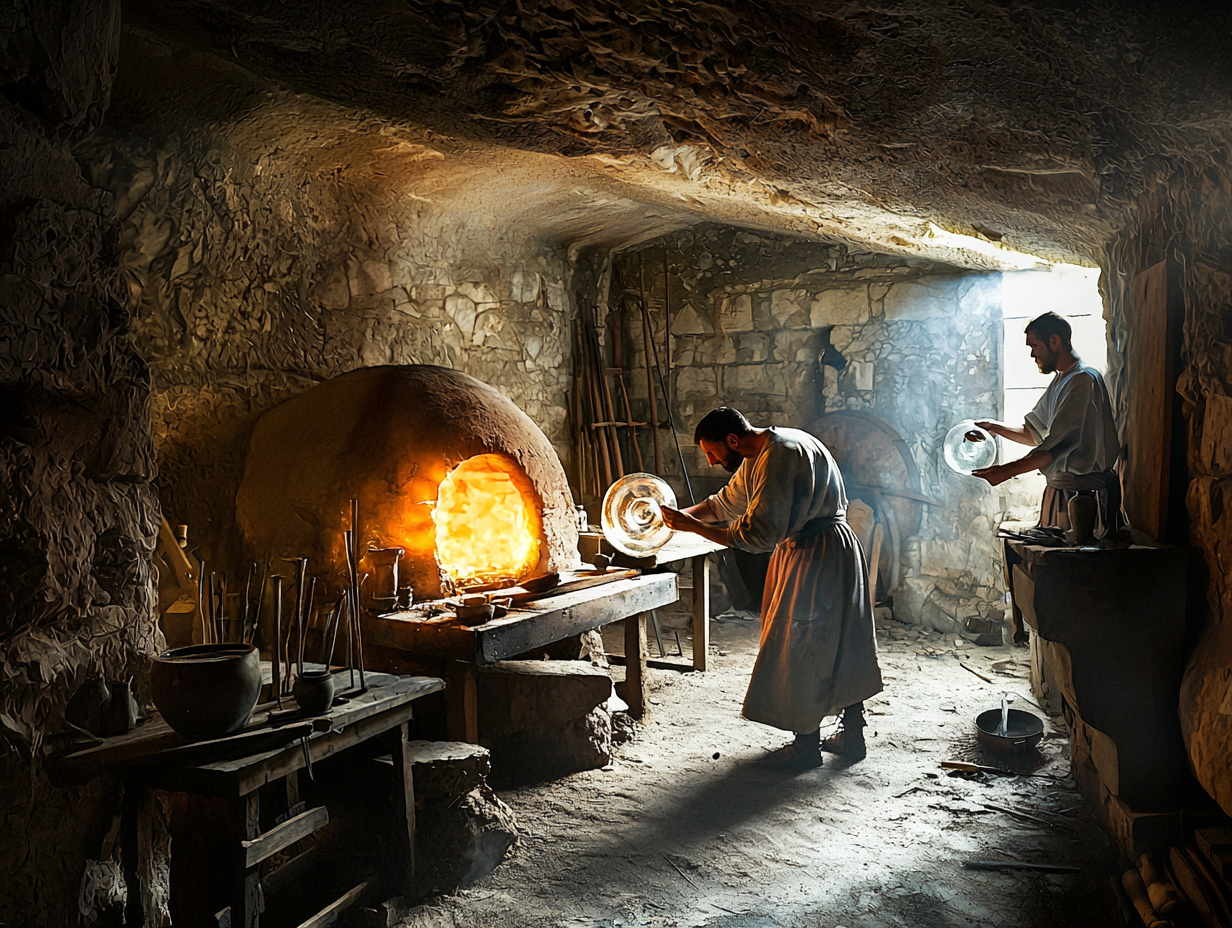
Ancient Rome was one of the civilizations that most contributed to the evolution of glassmaking. Around 100 BC, the Romans perfected the technique of glassblowing, producing a wide variety of objects, from containers to decorative items. They were also the first to use glass for windows, as Cicero mentioned houses “covered with glass.” The use of glass windows soon spread beyond the noble classes, becoming a symbol of refinement and technological progress.
500 AD
The evolution of glassmaking
Over the centuries, glassmaking continued to advance, with significant innovations such as the refinement of flat glass production. Around 500–600 AD, flat glass was made through a process of blowing and subsequent spinning. This technique remained in use until the emergence of modern technologies in the 19th century, which transformed glass into a material with countless applications across industry and art.
1291
The Birth of Murano: The Center of Glassmaking
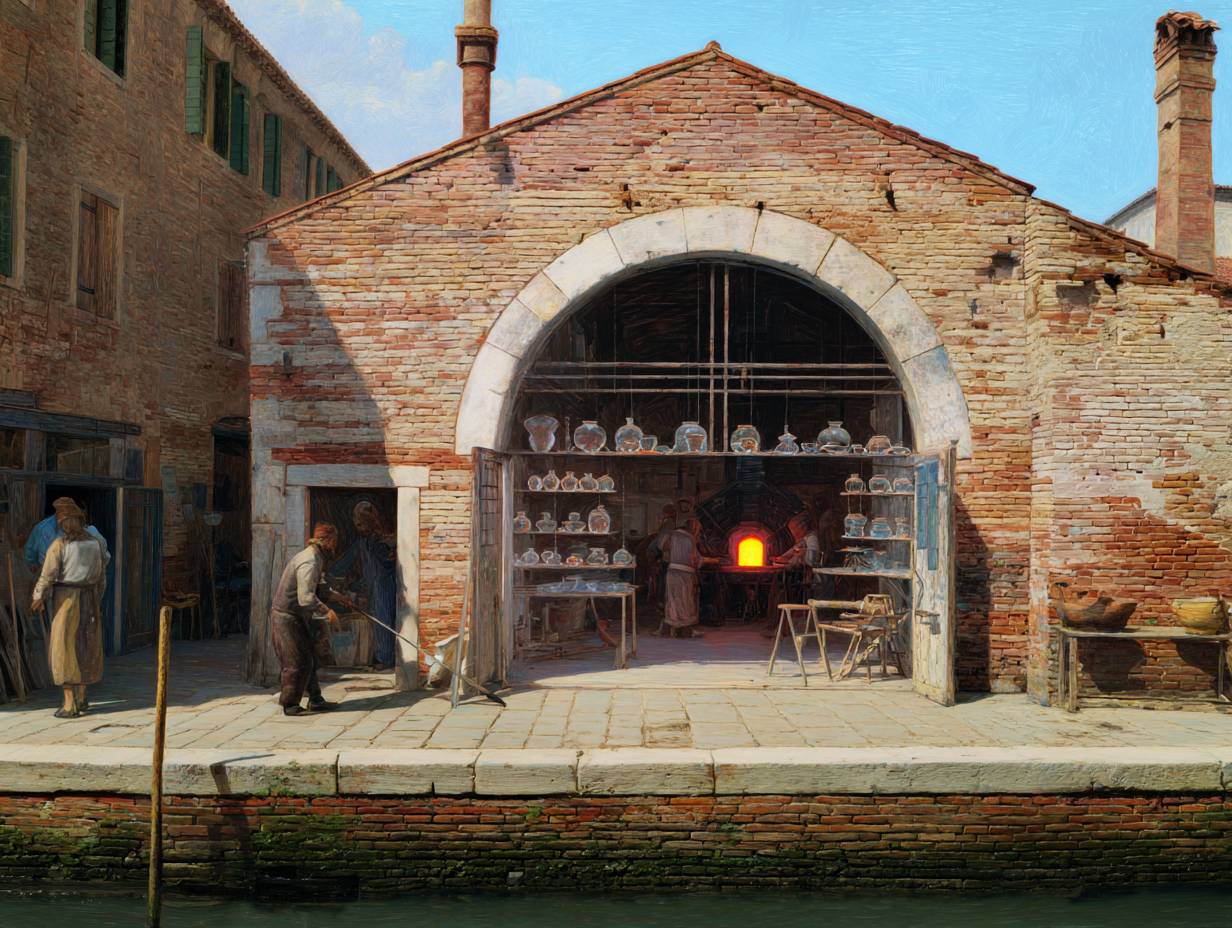
In the 13th century, the art of glassmaking took root in Murano, a Venetian island that became the heart of glass production. Due to frequent fires caused by glassmaking furnaces, the Great Council of the Republic of Venice decreed in 1291 that all furnaces be moved to the island of Murano, consolidating the industry in a well-guarded area. This relocation also served to protect the closely guarded secrets of glassmaking, which were fiercely protected by the island’s master glassmakers.
Murano’s glass industry became synonymous with quality and innovation, with Murano glass becoming a highly sought-after product worldwide for centuries. The master glassmakers of Murano perfected the art of glassblowing and the creation of artistic objects, developing techniques that continue to symbolize glassmaking around the globe.
1665
The Modern Glass Industry
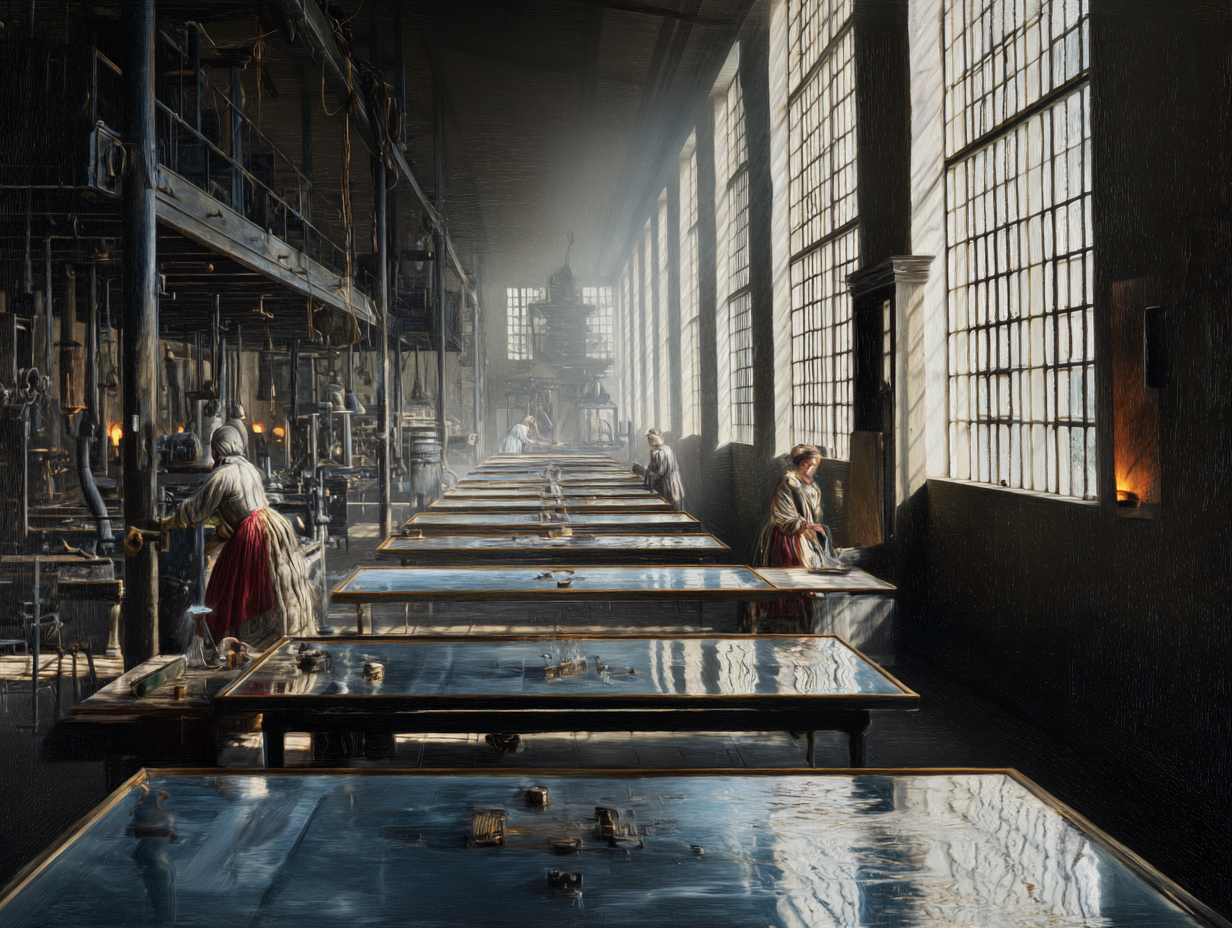
With the advent of the Industrial Revolution and technological advancements in the 19th century, glass production transitioned from a manual craft to an advanced industrial process. The introduction of mass production machinery and automation revolutionized the ability to manufacture glass at scale, reducing costs and increasing efficiency.
In 1665, the creation of the “Manufacture Royale des Glaces” in France marked the beginning of a new era for glass production. Over the centuries, this industry has seen the introduction of innovative techniques, such as cast glass and, later, float glass.
20th century
Glass and Modern Architecture
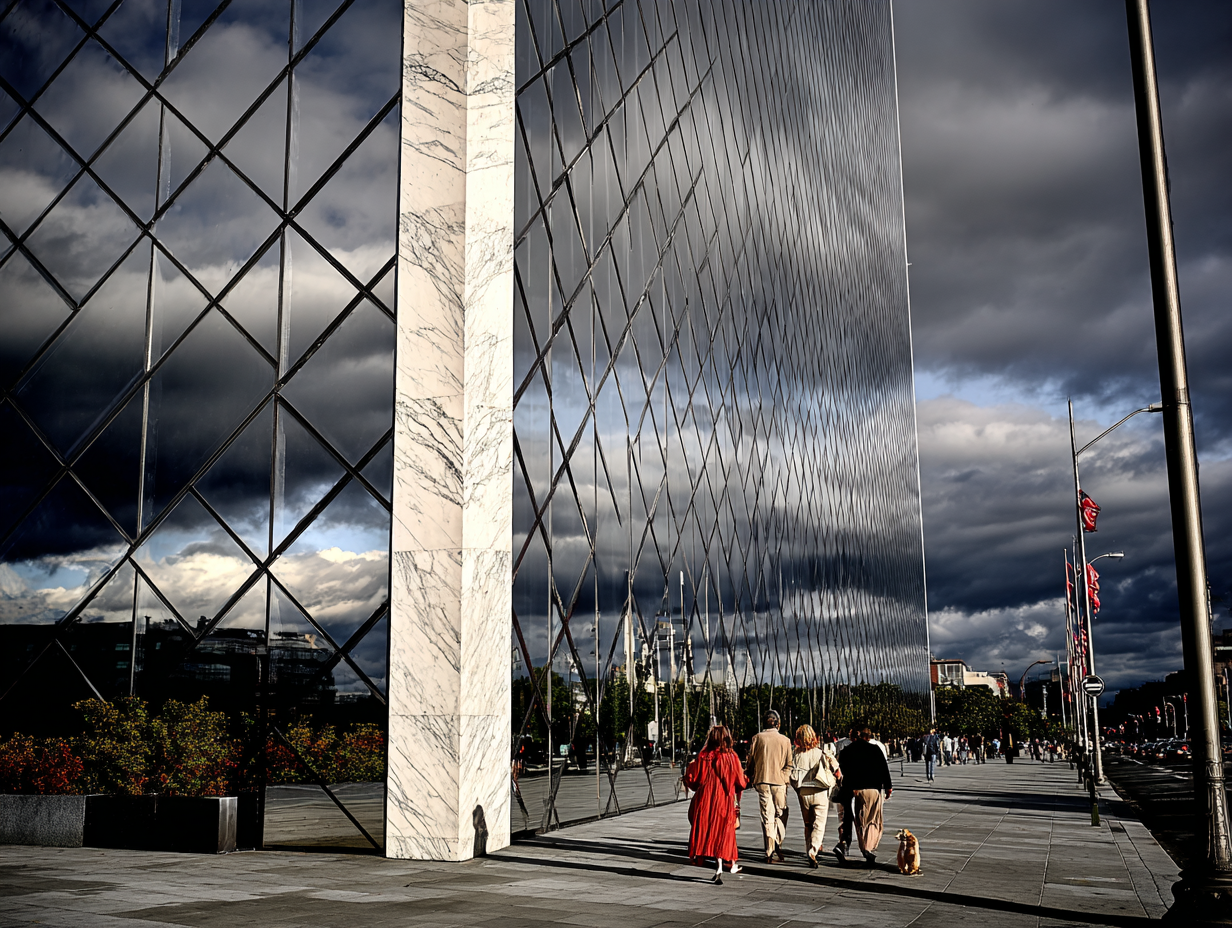
In the 20th century, glass found a new role in modern architecture, becoming a central element in design and construction. With its transparency, strength, and versatility, glass revolutionized building design, serving both functional and aesthetic purposes.
The combination of glass and steel led to the creation of impressive, innovative structures like skyscrapers and theatres, where glass’s ability to transmit natural light and blend the interior with the exterior became essential. Advances in glass processing techniques, such as tempered and laminated glass, have been crucial for safety, while insulating glass has played a key role in enhancing the energy efficiency of buildings.